Speaker #1: Prof. Longbing Cao
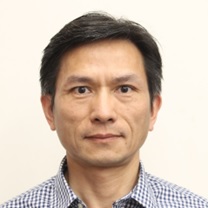
Title: Humanoid AI with Humanity Modeling, and Human and Virtual-Physical Humanoid Alignment
Abstract:
A longstanding goal of 70-year AI research has been on replicating (partial) human humanity by machine humanity, where advanced GenAI and LMMs-driven humanoid robots demonstrate a potential omniverse futuristic platform for human-like to humane humanoids, minds, and intelligences. In the century-long journey of robotics and six-decade humanoid studies, including today, few humanoids demonstrate partial humanity, none have embodied true humaneness, remaining distant from achieving human-like to human-level intelligence. This talk introduces the concepts, landscape, and knowledge spectrum of Humanoid AI and AI Humanoids, Humanity Modelling, and Human and Virtual-Physical Humanoid Alignment. We unveil boundless opportunities of transforming 1) AI robotics into a research era of humanoid AI developing humane AI-driven humanoids, 2) AI robots into new-generation humanoid AI robots (AI humanoids) through humanizing humanoids with functional and nonfunctional specifications, 3) humanity modelling into humanoid AI for humane humanoids, and 4) a human and virtual-physical humanoid integrative ecosystem with synthesis, transfer, and alignment between human systems, virtual humanoids in metaverse, and physical humanoids. We also demonstrate preliminary studies in these directions, including enabling AI humanoids 1) to behave, interact, learn, infer, collaborate, reflect, and adapt to open and complex environments; and 2) to undertake real-time, realistic, multimodal, situated, and interactive mind-to-action, perception-to-behavior, and vision-to-emotion transitional capabilities and tasks, achieving an unprecedented degree of simulating human characteristics and intelligence. Humanoid AI and AI humanoids nurture symbiotic advancements and future opportunities of integrating and transforming humanity modeling into humane AI and humanoid robotics.
Brief Bio:
Longbing Cao holds a PhD in Pattern Recognition and Intelligent Systems, and a PhD in Computing Sciences. He is the Distinguished Chair in AI, the Director of Frontier AI Research Centre, and an Australian Research Council Future Fellow (professor) at Macquarie University, Sydney Australia. Alongside encompassing AI, intelligent systems, data science, machine/deep learning, and applied statistics, he pioneered the concepts of open complex intelligent systems, humanoid AI, non-IID learning, behavior informatics, actionable knowledge discovery, and agent mining, represented by about 400 publications since 2005 and over a hundred of sole or first-authored publications including five monographs. His enterprise innovations and impacts traverse over 10 business domains from public to private sectors, such as government services, capital markets, banking, and insurance. His professional commitments including establishing IEEE DSAA and Springer-Nature’s Journal of Data Science and Analytics, serving as general chair of KDD 2015 and CIKM 2027, and chair of steering committees of PAKDD and DSAA. He received a Eureka Prize (so-called the “Oscars” of Australian science). Please refer to his lab at http://www.datasciences.org, multiple scholarships are available for motivated PhD or postdoctoral research.
Speaker #2: Prof. Carl Yang
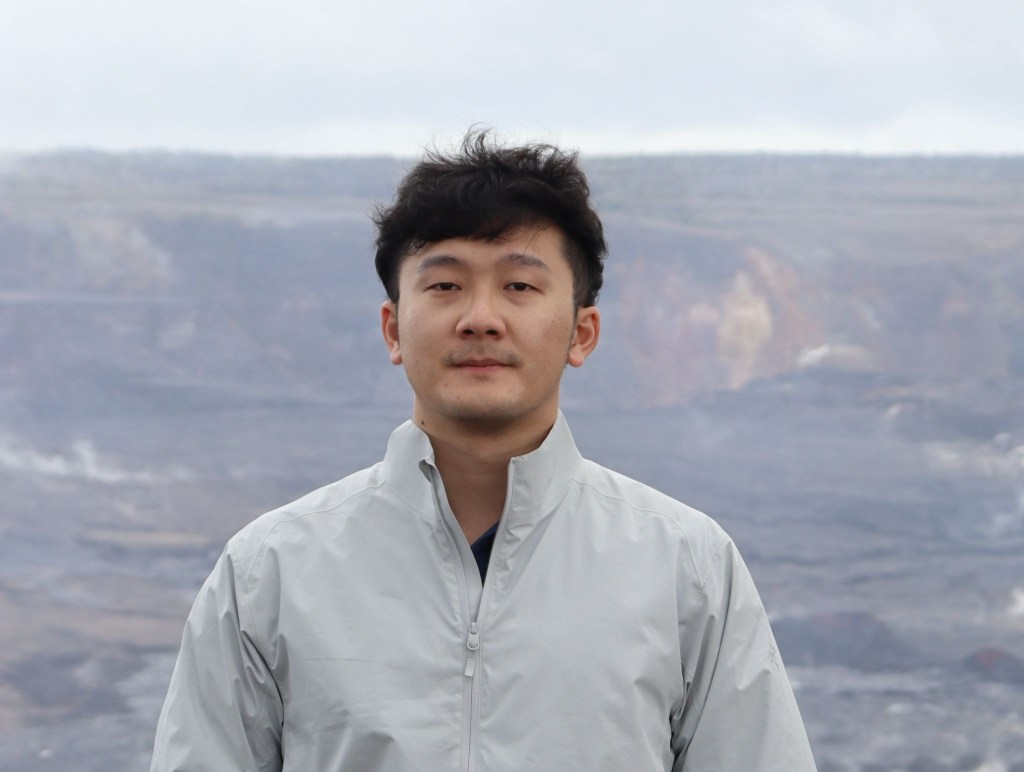
Title: Expediting Next-Generation AI for Health via KG and LLM Co-Learning
Abstract: Large language models (LLM) have brought disruptive progress to information technology from accessing data to performing analytical tasks. While demonstrating unprecedented capabilities, LLMs have been found unreliable in tasks requiring factual knowledge and rigorous reasoning, posing critical challenges in domains such as healthcare. Knowledge graphs (KG) have been widely used for explicitly organizing and indexing biomedical knowledge, but the quality and coverage of KG are hard to scale up given the notoriously complex and noisy healthcare data with multiple modalities from multiple institutions. Existing approaches show promises in combining LLMs and KGs to enhance each other, but they do not study the techniques in real healthcare contexts and scenarios. In this talk, I will introduce our research vision and agenda towards KG-LLM co-learning for healthcare, followed by success examples from our recent exploration on LLM-aided KG construction, KG-guided LLM enhancement, and federated multi-agent systems. I will conclude the talk with discussions on future directions that can benefit from further collaborations with researchers interested in data mining or biomedical informatics in general.
Brief Bio:
Carl Yang is an Assistant Professor of Computer Science at Emory University, jointly appointed in the Rollins School of Public Health and Nell Hodgson Woodruff School of Nursing. He received his Ph.D. in Computer Science at University of Illinois, Urbana-Champaign in 2020, and B.Eng. in Computer Science and Engineering at Zhejiang University in 2014. His research areas span data mining, deep learning, multimodality foundation models and trustworthy AI, with applications in graph analytics, neuroscience, biomedicine and healthcare. Carl’s research results have led to 200+ peer-reviewed publications in top venues across AI/ML and medicine/healthcare. He serves as the Organizer of Health Day and Inaugural Program Chair of AI4Sciences in KDD, and the Chair-Elect of AMIA KDDM Working Group. He is also a 1% NIH/CDC Grant Awardee in 2025, and a recipient of the ACM SIGKDD Rising Star Award in 2025 (one winner a year in the world), NSF CAREER Award in 2025, NIH K25 (Career) Award in 2023, and multiple Best Paper Awards such as of MedInfo 2025, KDD Health Day 2022, ML4H 2022, and ICDM 2020.
Speaker #3: Dr. Xinxing Xu
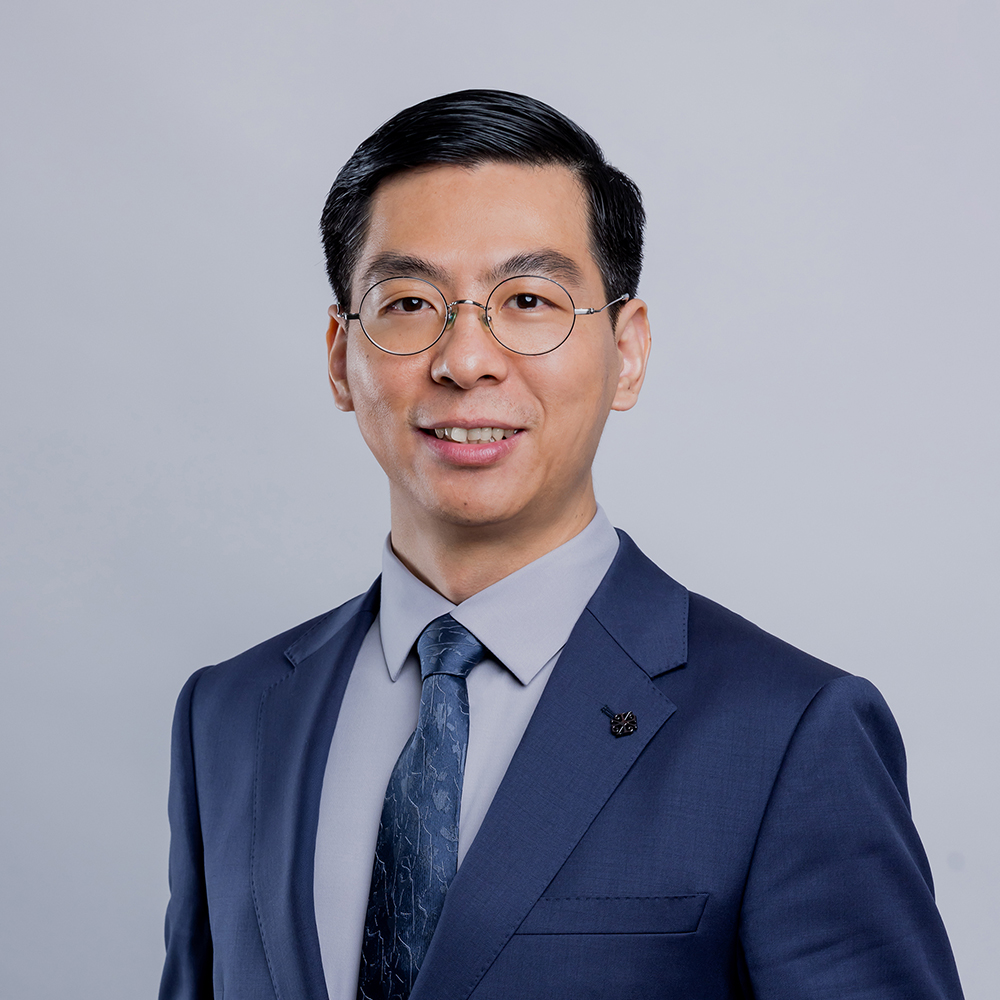
Title: Building Industry Intelligence with Foundation Models and Agentic AI Systems
Abstract: Artificial intelligence is entering a new phase, moving from powerful foundation models to agentic AI systems capable of reasoning, planning, and informed decision-making in complex, real-world environments. In this talk, we share how Microsoft Research Asia is advancing this transition to build industry intelligence across healthcare, applied data science, finance, and design. We highlight key research initiatives that illustrate this evolution, such as GigaPath and MIRA (a medical time-series foundation model) for healthcare, RD-Agent for scientific discovery, and large language models for design. These systems integrate domain knowledge and structured data to improve medical prediction, accelerate R&D, and support critical decision-making. We conclude by outlining our vision for scalable and customizable generative AI solutions that translate foundational research into real-world impact across multiple industries.
Brief Bio: Dr Xinxing Xu is the Principal Research Manager at Microsoft Research Asia (MSRA) – Singapore. His research interests include machine learning, computer vision, multimodal AI, medical data analysis, Agentic AI and AI for digital healthcare. Prior to joining Microsoft, he was a Senior Scientist and the Group Manager of Multimodal AI, Computing & Intelligence Department, and the Innovation Target Area (ITA) Lead, MedTech & HealthTech, at Institute of High Performance Computing (IHPC), The Agency for Science, Technology and Research (A*STAR), Singapore. He also holds the Adjunct Assistant Professor at Duke-NUS Medical School of the National University of Singapore (NUS), and the Adjunct Principal Investigator at the Singapore Eye Research Institute (SERI), Singapore National Eye Center (SNEC). He obtained his bachelor’s degree in electronic engineering and information science from the University of Science and Technology of China (USTC), Ph.D. in Computer Engineering from Nanyang Technological University (NTU), Singapore.
 Singapore ACM SIGKDD Chapter